Historical noteWritten for Viva-Almería in the mid-2000s. Prices, opening times and contact details are left out.
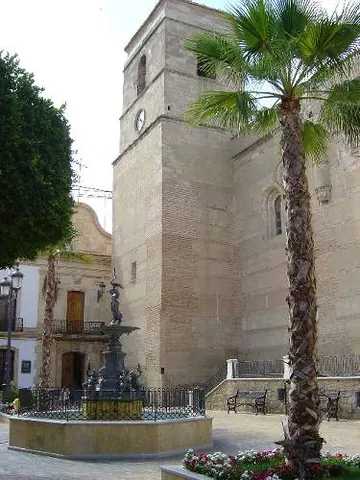
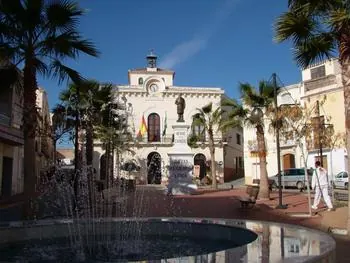
In the early 19th century silver was discovered in the Sierra Almagrera Mountains. The news spread like wild fire and Cuevas del Almanzora became home to many a fortune hunter. The town got it’s name from the many artificial caves in the nearby hills once inhabited by the miners. This was the start of an age of splendour for the town. The impressive legacy of this silver rush can be seen all around from the elegant family houses of the mining barons to the grand avenues, churches and statues. Many of the grand old houses remain and it is well worth walking around the old town of Cuevas to gaze at the impressive bourgeois architecture, many are still inhabited. A number of these can be found in the Plaza de la Constitución and around the town Hall.
There are many places of interest, especially:
- The Hermitage of San Pedro de Alclalá. It houses the image of the patron saint of Cuevas del Almanzora.
- The Convent of San Antonio. Built in1651 in the Baroque style, it is dedicated to San Antonio of Padua and was a charity hospital for more than a century.
- A visit to the cave dwellings is a must. Nearby is the Terrera del Calguerín, five levels of abandoned caves, once inhabited during the silver rush.
- The area around Cuevas del Almanzora is abundant in prehistoric settlements and there are many archaeological sites. Fuente Álamo is the most interesting, found in foothills of Sierra de Almagro, it was inhabited between 1900BC and 1300BC.
About this page
Text and photograph from the original Viva-Almería guide to Cuevas del Almanzora, written in the mid-2000s. Edited for this site: details about shops and services moved to “At the time of writing”.
Earlier address: /Cuevas_del_Almanzora_P13.html