Historical noteWritten for Viva-Almería in the mid-2000s. Prices, opening times and contact details are left out.
By the various studies and consultations carried out to diverse levels, it can be affirmed that the Arabian word, FOQUIA (AL, would be the article) signifies something that is higher than something else. "The High one", "The High Thing", "The Upper Thing", but in reference to another lower... thing!
Because of it, it is thought that the Arabs that inhabited the nucleus of Zurgena, when they crossed the river, they distinguished among the lower part of the plantation plots named Tamarchete and the one that was above them, Alfoquia.
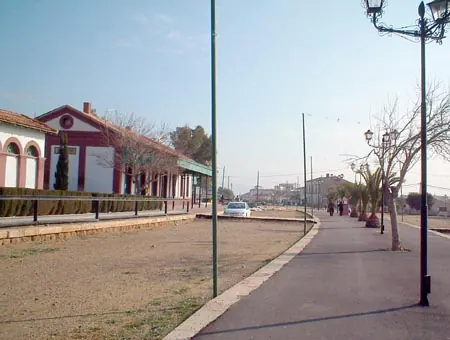
The beginnings of the urban area of Alfoquia was limited, in its origins, to diverse farmhouses disseminated along the "Pago de Alfoquia", of where took its name. When the Lorca-Baza railroad was inaugurated in 1894, some constructions for storage of the products were initiated that arrived or left for the railroad.
Without doubt, La Alfoquia owes its true origin to the railroad, in fact during almost all of the 20th Century, the town was known as The Station and was only given that of Alfoquia in the official media of the Town Hall of Zurgena.
The so named "House or Store of the Aunt Magdalene" was one of the symbolic buildings of La Alfoquia until May 30th, 1997 when the machines, due to their poor state, put an end to it. The house was a witness to all kinds of activities: Dwelling, goods Depot for wheat, Christmas celebrations, anniversaries, weddings, etc.
Being of very bad quality, drinking water was limited to that brought to the town by R.E.N.F.E. (Spanish Rail).Three taps were installed in different parts of the town to provide water for public general use, soon after, groups of and individual neighbours begun to tap into the water supply, redirecting the water to their homes.
In La Alfoquia there have been two grain mills, one used to obtain food for people and the other for their animals. one moved by the water of the stream of Tamarchete, the other, with electric current, situated in the center of the town.
About this page
Text and photograph from the original Viva-Almería guide to La Alfoquia, written in the mid-2000s. Edited for this site: details about shops and services moved to “At the time of writing”.
Earlier address: /la_alfoquia_p18.html