Historical noteWritten for Viva-Almería in the mid-2000s. Prices, opening times and contact details are left out.
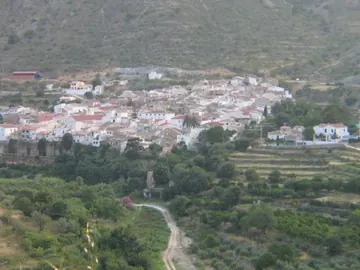
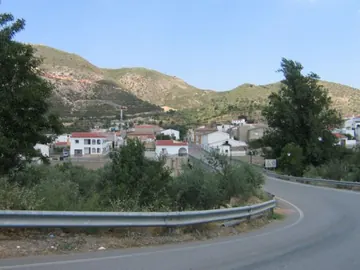
The contrast between the gardens around the town and the surrounding countryside is amazing. one being green and lush, the rest dry and arrid. Very noticable on the way to the town, a few bends on the mountain road from Líjar, you will begin to see the difference.
The Cave of the Moor, in its immediacies, is a full ravine of natural caverns in which the stalagmites and the stalactites that have piled up in time allowing for a simple walk without danger that permits you to feel like a caver.
Still more curious an attraction is the best-known one of the anecdotes of its history, of that long biography of the town that is mended to the prehistory and that has left us incomprehensible messages of the primitive man in the "Stone of the Horseshoe", or that Arabic Líjar in which the agriculture flourished and the cultivation of mulberry trees and the mythical industry of the silk.
The most impressive part of Líjar’s history is what happened over a Century ago. In 1883 King Alfonso XII was stoned by the people of Paris due to an inexplicable diplomatic error with the Spanish Monarch. Líjar took the news a bit to heart and decided that day that they would declare war against France! Astonishing but true, Líjar remained at war with France for 110 years until 1993 when a peace treaty was signed in France with the mayor and superiors of Líjar.
The locals tell funny stories of their experiences meeting French people during their lives at war against them, for example, French tourists coming through the town not knowing why the locals would throw pebbles at their vehicles, or how they would meet French folk on their travels and tell them of this fact which would make the French laugh at them, causing a brawl to begin, ending in an embrace and a meal or drink together as friends.
Definately worth a visit to admire its curiosities and hear first hand the stories that the town’s history provides from the locals who are really warmand friendly and laugh at their elders and ancestors for their determination.
A basic knowledge of the Spanish language will be necessary and a good sense of humour is a must.
About this page
Text and photograph from the original Viva-Almería guide to Líjar, written in the mid-2000s. Edited for this site: Spanish accents restored in place names.
Earlier address: /lijar_p16007.html