Historical noteWritten for Viva-Almería in the mid-2000s. Prices, opening times and contact details are left out.
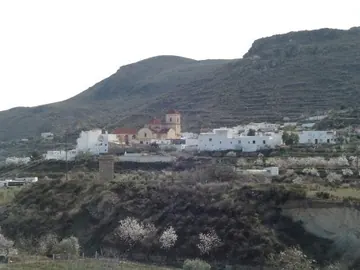
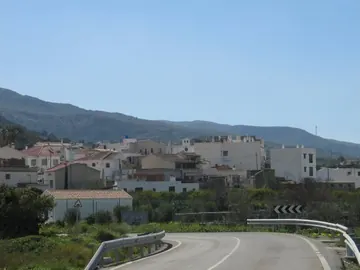
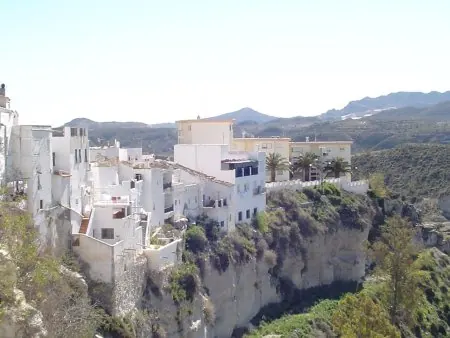
The white-walled church of Santa María has a 16th century nave with Mudejas woodwork, its gable end was built between 1765 and 1768 and the main door is 19th century. San Roque and San José, patron saints of Sorbas, guard the corners of the bell-tower, with the help of Saint Peter and Saint Paul. Next to the church is the town hall and a 17th century mansion thought to have belonged to the Duke of Alba.
Sorbas is known for its traditional pottery, an old Moorish oven is used for firing pottery. Ceramics are sold from the workshops in the Barrio de las Alfarerias. Outside the town, farmhouses have been restored to provide accommodation for visitors to the Karst and Yesos Natural Park, where a big attraction is the caves, carved by water erosion, with chasms, stalactites and stalagmites, they stretch for several kilometres. It is one of the largest cave networks in Europe, over 1,500 have been mapped in a 12km area. There are guided visits in the summer.
About this page
Text and photograph from the original Viva-Almería guide to Sorbas, written in the mid-2000s. Edited for this site: 1 sentence with prices, opening times, contact or business details removed.
Earlier address: /Sorbas_P28.html