Historical noteWritten for Viva-Almería in the mid-2000s. Prices, opening times and contact details are left out.
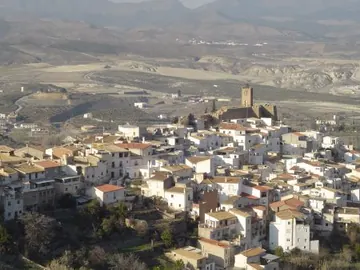
Even earlier, a prehistoric settlement existed here. At the end of the 16th century and the beginning of the 17th, the town was moved to its present position, close to the Almanzora River and spreading along the roads which run through the valley.
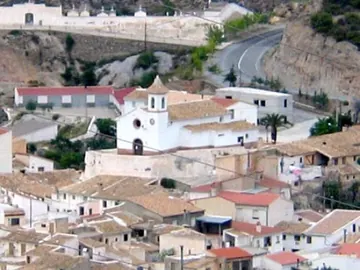
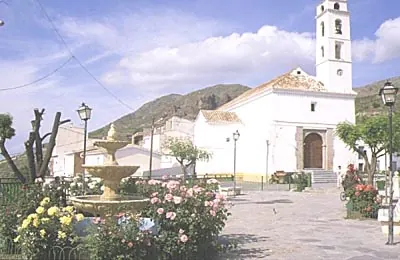
The church of Santa María, built between 1660 and 1665, and restored in the 1990s, has several side chapels, whose domes were added in the 18th century, and a bell-tower; its single nave is covered with intricate Mudejar (Moorish) woodwork and outside, part of the wall is decorated with blind, Romanesque arches on plinths.
The nearby Hermitage de la Virgen del Socorro (1630), in the shape of a Roman cross, is of baroque design. The white marble cross opposite the Hermitage was erected in 1634.Outside the village an attractive Via Crucis wends its way through the pinewoods.
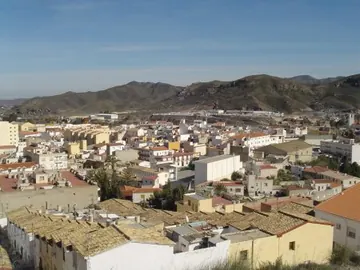
The Sierra de los Filabres rises up behind the town, and on this side of the range the climate is damper. Behind the town there are pinewoods where brambles spill onto the road and wild boar roam the area at night. If you wish, you can take the route to Bacares and right over the top of the mountains and down towards Almería on the other side, well worth it for the views and the wild scenery.
You can see that as you walk through the streets of the town centre in the afternoons during the siesta.
About this page
Text and photograph from the original Viva-Almería guide to Tíjola, written in the mid-2000s. Edited for this site: Spanish accents restored in place names; 1 sentence with prices, opening times, contact or business details removed.
Earlier address: /tijola_p3106.html