Historical noteWritten for Viva-Almería in the mid-2000s. Prices, opening times and contact details are left out.
Adra was once a fortified city protected by a small castle which sadly no longer remains, though fragments of the town walls can still be found. There are many historical buildings and sights in the area worth visiting...
- The Museum of Adra occupies the former home of the Marques de Villacañas, a palatial building, where the history of town can be viewed. The museum is at the centre of city life with it’s galleries hosting many successful exhibitions.
- The Molino del Lugar is a restored mill next to the museum. It was built in 1772 to replace the previous mill that was washed away by a flood in 1763.
- The Hermitage de San Sebastián which, although built in 1680, was completely restructured in 1751. Inside are the venerated statues of San Nicholás de Tolentino and of the Virgen del Mar (Virgin of the Sea), the patron saints of Adra.
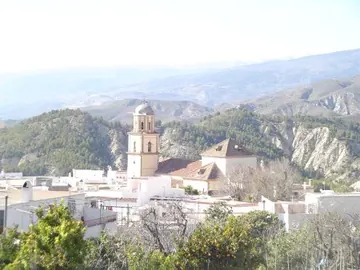
- The Parish Church of the Immaculate Conception has it’s origins in the 16th century but following a collapse it was rebuilt in 1761. It survived an earthquake in 1804 with little damage but was later restored in 1998. This church is said to be one of the most emblematic buildings of the town.
The Municipal Tourist Office is housed in the Torre de los Perdigones, a 45 metre high tower. It is next-door to a former vinegar factory that is now used as an exhibition space. Originally, in 1822, these buildings formed part of the San Andres Foundry, home to Spain’s first steam engines. Later, in 1937, the building was transformed into one of the most advanced lead foundries in Spain.
A walk down Calle Natalio Rivas is very enjoyable. The road crosses the town and was home to many of the grand houses that were once the splendour of Adra.
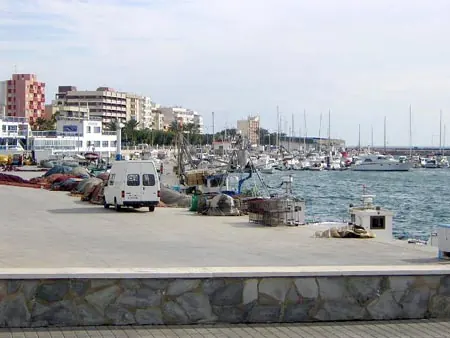
Other interesting places include the port and beaches of Adra. The fishing port, built in 1911, is home to regular fish auctions held at dawn. The beaches of Adra were once fortified and guarded by watch towers. Several of these remain with the oldest being the Tower of Guainos which dates from the 16th century.
Nearby, close to the mouth of the River Adra is the Nature Reserve of the Albuferas de Adra, a protected wetland, where a huge diversity of birds, fish and reptiles co-exist. The area has been declared a conservation zone and Place of Community Interest.
About this page
Text and photograph from the original Viva-Almería guide to Adra, written in the mid-2000s. Edited for this site: details about shops and services moved to “At the time of writing”.
Earlier address: /Adra_P2.html